What Is an EGOT?
The EGOT — an acronym for Emmy, Grammy, Oscar, and Tony — represents the complete sweep of American entertainment’s four major award institutions. To hold an EGOT is to have been recognized at the highest level in television, recorded music, film, and live theatre. It is, by any measure, the rarest sustained achievement in mainstream American culture.
The Emmy is awarded by the Television Academy for outstanding achievement in television. The Grammy is awarded by the Recording Academy for excellence in the music industry. The Oscar is awarded by the Academy of Motion Picture Arts and Sciences for achievement in film. The Tony is awarded by the Broadway League and the American Theatre Wing for distinguished achievement on Broadway. Each award represents a different industry, a different voting body, a different set of professional relationships to cultivate, and a different kind of artistic output to sustain. Winning one is a career achievement. Winning all four requires something closer to a sustained act of will across multiple decades.
The term itself was coined in 1984 by Miami Vice actor Philip Michael Thomas, who announced his intention to win all four on the Phil Donahue Show. It entered popular culture in 2009 when NBC’s 30 Rock devoted an episode to the concept — with Tracy Morgan’s character pursuing it and Kenneth the page declaring it “the most prestigious thing in show business after a PEGOT.” Thomas never won any of the four awards. The acronym outlasted his ambitions.
Why Is It So Hard?
The difficulty of the EGOT is not simply a matter of talent. The entertainment industry is full of talented people who never win anything. The EGOT requires something more structural: a career that moves between industries, each with its own gatekeepers, its own timelines, and its own definitions of excellence.
A film actor can spend an entire career in Hollywood and never appear on Broadway. A Broadway star can define a generation of musical theatre and never record an album the Grammy voters notice. A recording artist can be the most celebrated musician of their era and never make a film that qualifies for the Academy’s consideration. The categories don’t naturally overlap. Most careers, even extraordinary ones, stay within a lane.
There’s also the question of time. The Tony requires physical presence in New York during a Broadway run. The Emmys require sustained television output during an era when prestige television is crowded with competition. The Grammys require an active recording career with enough industry support to move through the nominating committees. The Oscars require a film that the Academy’s ~10,000 voting members care about enough to rank first. Threading all four needles in a single career is not a matter of showing up — it requires decades of sustained relevance across industries that rarely talk to each other.
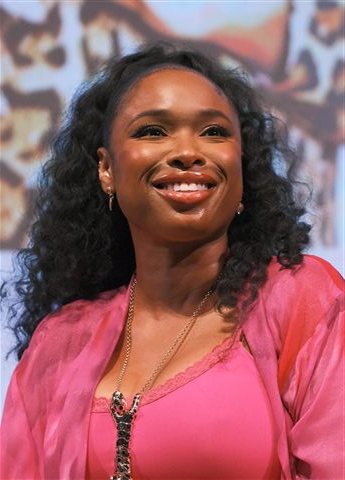
The people who have done it tend to fall into two categories: performers and composers. Performers — Hayes, Hepburn, Moreno, Davis, Goldberg, Hudson — move between stage, screen, and television as a matter of professional range. Composers and lyricists — Menken, Hamlisch, Rice, Lopez, Lloyd Webber — write for film, Broadway, and television simultaneously, and their work is the kind that gets recorded and nominated for Grammys. The EGOT naturally rewards people whose work takes multiple forms at once.
The History of the EGOT Club
For the first half of the twentieth century, the EGOT was impossible to achieve simply because not all four awards existed. The Tony was established in 1947, the Emmy in 1949, the Grammy in 1958. The Oscar predates all of them, founded in 1929. From 1958 onward, the possibility existed in theory.
In practice, it took nearly two more decades. Helen Hayes became the first EGOT holder in 1977, when a Grammy for a spoken word recording joined her two Oscars, two Tonys, and Emmy. In the same year, Rita Moreno completed her own set — two people arrived at the same milestone simultaneously, which says something about how difficult the path was in that era. Both were actresses of extraordinary range; both had been working for decades before the Grammy completed the picture.
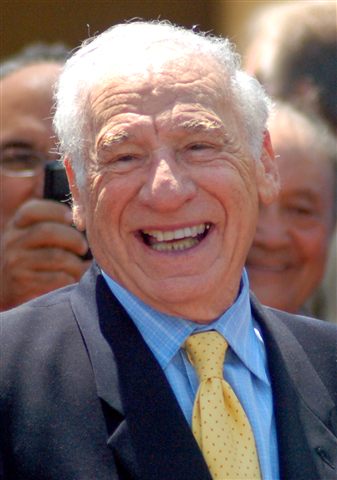
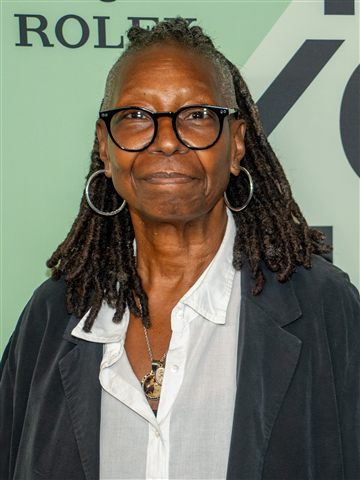
The 1990s brought Audrey Hepburn (1993) and Marvin Hamlisch (1995) — Hepburn completing her set in the final months of her life, Hamlisch building on one of the most extraordinary single nights in Oscar history. The 2000s added Mike Nichols, Mel Brooks, and Whoopi Goldberg as the concept began to attract more cultural attention.
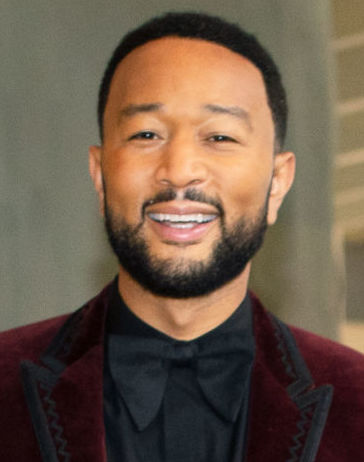
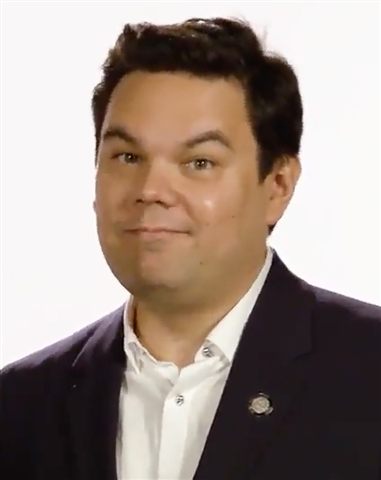
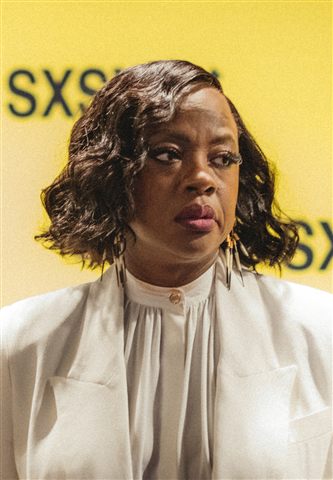
The most significant expansion came in the 2010s and 2020s. Robert Lopez’s 2014 EGOT was different in kind from those before it: he won all four awards in their primary competitive categories, with no honorary awards, no spoken word recordings, no producer credits. Pure creative work. John Legend (2018) and Viola Davis (2023) brought the milestone to a new generation, with Davis becoming the first Black woman to achieve the competitive EGOT. The club has roughly doubled in size since 2014.
Future Predictions: Who Gets There Next?
The EGOT pipeline has never been fuller. A generation of artists who came up post-Hamilton — who understand the value of cross-medium work and have managers who think about it explicitly — are moving through the pipeline with an intentionality that earlier generations didn’t have. Below are the candidates most likely to complete the set, and our honest assessment of their path.
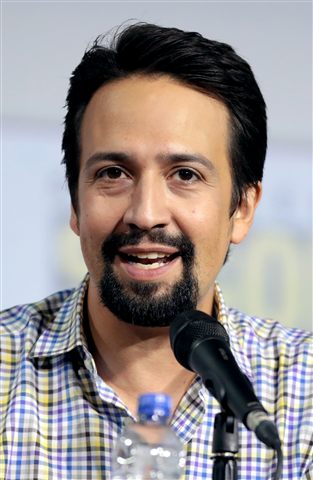
The most anticipated EGOT completion in the current era. Miranda has Grammy, Tony, and Emmy — three of the four, all won through the primary creative work of his career. His two Oscar nominations (Moana, Encanto) show the Academy considers him seriously; he simply hasn’t won yet. He is currently composing for several film projects and is the odds-on favorite to complete the EGOT within the next five years. The only real question is timing: which film breaks through. He would also hold a PEGOT — adding the Pulitzer Prize he won for Hamilton.
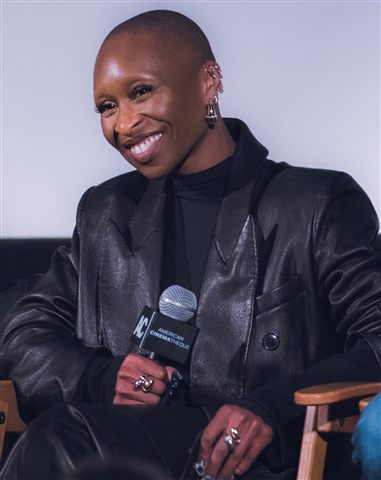
Her performance as Elphaba in Wicked (2024) was one of the most discussed of the year and returned her to the center of the Oscar conversation for the first time since Harriet. The Emmy requires a television project she hasn’t yet prioritized, but her profile is high enough that the offers will come. She is the most complete performer on this list in terms of raw ability — a voice, a stage presence, and a screen presence that exist at the highest level. The awards feel like a matter of time and project selection rather than talent.
Her path is inverted from most candidates: she already has the Grammy and Oscar that most people spend careers pursuing. What she needs is Broadway and a prestige television role — two things that require a deliberate pivot from her current career structure. She has spoken publicly about wanting to do theatre. A single Broadway production, written for her or built around her, would put her one Emmy away. The obstacle isn’t ability; it’s whether she makes the institutional commitment that Broadway requires.
The most Grammy-decorated artist in history has, despite decades of cultural dominance, never won a competitive Oscar, Tony, or Emmy. Her Grammy haul (32 wins) is so disproportionate to the rest of the EGOT that the gap reads less as bad luck and more as a structural feature of her career: she has never prioritized the three industries that award the other three. If she ever decides to pursue the EGOT deliberately, the resources and the profile to do so are obviously there. But at 44, with no clear indication she is pursuing any of the three remaining awards, the EGOT is plausible in theory and speculative in practice.
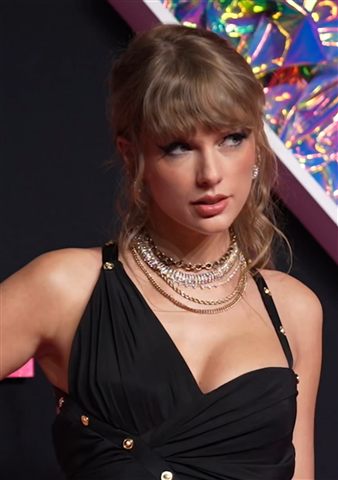
Four Grammy wins for Album of the Year — a record — at 36 years old. Her Eras Tour concert film was the highest-grossing concert film in history and positioned her as a genuinely cinematic presence. The question is whether she pursues dramatic acting or an original film score seriously enough to land an Oscar, whether she has interest in Broadway, and whether she does television work that competes in prestige Emmy categories. Her cultural omnipresence in 2023–2025 was the greatest sustained pop star moment in a generation. Whether it translates to the institutional work of pursuing an EGOT is a different question entirely.
The least-discussed serious EGOT candidate on this list. Batiste won five Grammys in a single night in 2022 (including Album of the Year for We Are) and an Oscar for the Soul soundtrack shared with Trent Reznor and Atticus Ross. He is a trained musician from a New Orleans musical dynasty, a Broadway-adjacent figure with deep connections in the theatrical world, and the former bandleader of The Late Show with Stephen Colbert, which gives him a sustained television presence. He is perhaps the most likely person to complete an EGOT in the next decade that no one is currently betting on.
The pace of new EGOTs has accelerated in the last decade. Where the first four took from 1977 to 2001 — nearly 25 years — the most recent four have arrived between 2018 and 2023. The cross-medium career has become easier to construct in an era of streaming, global touring, and Broadway productions that travel internationally. The obstacles are the same as they always were — talent, luck, time, and the willingness to do the work in four completely different rooms. But the roads between those rooms are better paved than they used to be.
EGOT Members — Ranked by Total Wins


One Away — Missing a Single Award
Two Away — Strong Candidates


Notable — One Category Held

Notes on methodology: Rankings reflect confirmed competitive wins only where possible. Some EGOT holders received one or more of their awards in an honorary or special capacity: Barbra Streisand’s Tony was a special “Star of the Decade” award (1970) rather than a competitive win — she is listed as an EGOT by most sources but is excluded from this ranking due to that distinction. Jonathan Tunick completed an EGOT in 1997 as an orchestrator, a category most rankings include. Tony Awards for producers are counted as competitive wins, consistent with how AMPAS and the Recording Academy treat producer credits. Win counts are approximate and reflect awards in primary competitive categories; special awards, honorary degrees, and Lifetime Achievement Grammys are not included in totals.
The term “EGOT” was coined by actor Philip Michael Thomas in 1984. It was popularized culturally by the 2009 30 Rock episode of the same name.