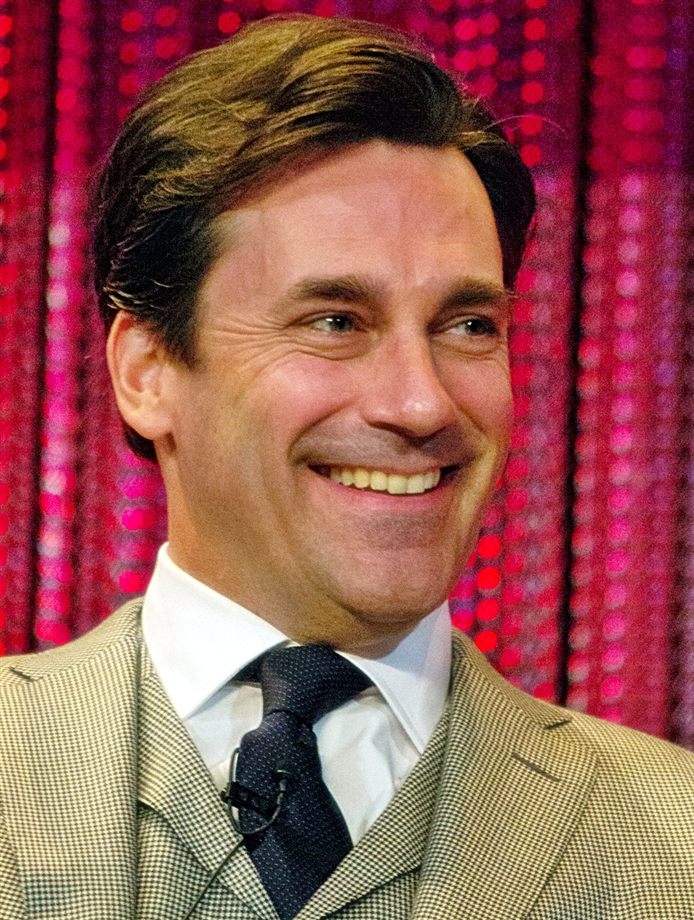
Landman • Paramount+ • 2024–Present
Jon
Hamm
Monty Miller — Owner, M-Tex Oil
Born March 10, 1971 • St. Louis, Missouri
Actor • Television • Film
Emmy Win • Outstanding Lead Actor Drama • Mad Men 2015
Golden Globe Win • Best Actor Drama • Mad Men
8 Emmy Nominations • Mad Men
SAG Nominations • Mad Men Ensemble
Monty Miller — The Character
Monty Miller owns M-Tex Oil — and therefore, in the logic of the Permian Basin, he owns a version of the world that Tommy Norris keeps running. Monty is charming, imperious, and completely dependent on Tommy while performing the opposite. He projects authority with the ease of a man who has never been asked to justify it, which is precisely the condition Tommy has spent his career navigating around, through, and occasionally under.
Hamm is perfectly cast. He has spent his career playing intelligent men whose surface is more polished than their interior, and Monty is another version of that architecture: a man who looks exactly like the person in charge because he has spent his life making sure he looks that way. The dynamic between him and Thornton’s Tommy — performed authority versus earned expertise — is the show’s central engine and the reason their shared scenes carry the most weight.
The Career
Jon Hamm spent his twenties and early thirties doing exactly what the industry does to handsome men without immediate breaks: guest spots, small roles, a lot of waiting. He was thirty-six when Mad Men premiered in 2007, and the show remade his career and his cultural profile simultaneously. As Don Draper — an advertising executive who has stolen another man’s identity and built a life on the performance of a self he invented — Hamm delivered one of the most sustained pieces of acting in American television history. The role required him to be compelling in stillness, to suggest interior depth through exterior control, to make charisma itself seem like a form of concealment. He did all of this across seven seasons and 92 episodes.
The awards recognition, when it finally came, was almost anticlimactic: he had been nominated for the Emmy eight times before winning in 2015 in what became a celebrated piece of awards correction. The Golden Globe came earlier and more readily. What the awards record doesn’t capture is how thoroughly Hamm transformed the cultural idea of what a prestige television lead looks like: before Don Draper, the template was more volatile, more visibly damaged. Draper’s damage was architectural — built into the structure of how he moved through a room — and Hamm made that legible without ever overplaying it.
His film work has been deliberately varied. Baby Driver (2017) used his physical ease as something sinister. Top Gun: Maverick (2022) used it as institutional authority. The Town (2010) cast him against type as an FBI agent. He has also demonstrated genuine comedic range in Bridesmaids (2011) and Unbreakable Kimmy Schmidt. Fargo Season 5 (2023) cast him as Roy Tillman, a violent sheriff and domestic abuser — the furthest he has gone from the suave authority of his persona, and one of his most effective performances.
Selected Filmography
| Year | Title | Role / Note | Medium |
|---|
| 2007–15 | Mad Men | Don Draper • Lead • 7 seasons Emmy Win • 2015Golden Globe Win | TV • AMC |
| 2010 | The Town | FBI Agent Adam Frawley — dir. Ben Affleck | Film |
| 2011 | Bridesmaids | Ted — comedic supporting performance | Film |
| 2014 | Million Dollar Arm | J.B. Bernstein • Lead | Film |
| 2017 | Baby Driver | Buddy — dir. Edgar Wright | Film |
| 2019 | Richard Jewell | Tom Shaw — dir. Clint Eastwood | Film |
| 2022 | Top Gun: Maverick | Vice Admiral Cyclone | Film |
| 2022 | Confess Fletch | Fletch • Lead | Film |
| 2023 | Fargo | Roy Tillman • Season 5 Emmy Nom | TV • FX |
| 2024– | Landman | Monty Miller • Lead | TV • Paramount+ |