From Cattle Ranches to the Room Where It Happens
Taylor Sheridan’s biography is the raw material of every show he has ever made. He did not write about the American West from the outside.
What Defines His Work
Sheridan’s creative signature is consistent across all his work: a preoccupation with land and its loss; men and women operating outside conventional moral frameworks; institutional violence (state, corporate, criminal) as an ambient condition rather than an episodic shock; landscapes that function as characters; and a deep suspicion of easy resolution. His protagonists — ranch patriarch, mob enforcer, CIA operative, oil field fixer — are always people for whom ordinary social constraints have stopped applying, and who must navigate a world that operates on older, harder rules.
He writes almost everything himself — a practice that would be impossible for most showrunners managing a single series, and that becomes a genuine logistical astonishment when applied to the seven or eight concurrent productions he has sustained simultaneously. The consistency of voice across the Paramount universe is not accidental: it is the result of one writer’s vision applied to every script.
He also directs regularly, owns a working ranch in Texas and Montana, and has embedded the rhythms of actual ranch and outdoor life into his productions with a specificity that audiences raised on generic Western imagery found immediately recognisable. The authenticity is not performed — it is lived.
A Western Mythology Built for Modern Television
The most expansive continuous narrative world in contemporary American television — a multigenerational saga of land, family, and power that spans from the 1880s to the present day.
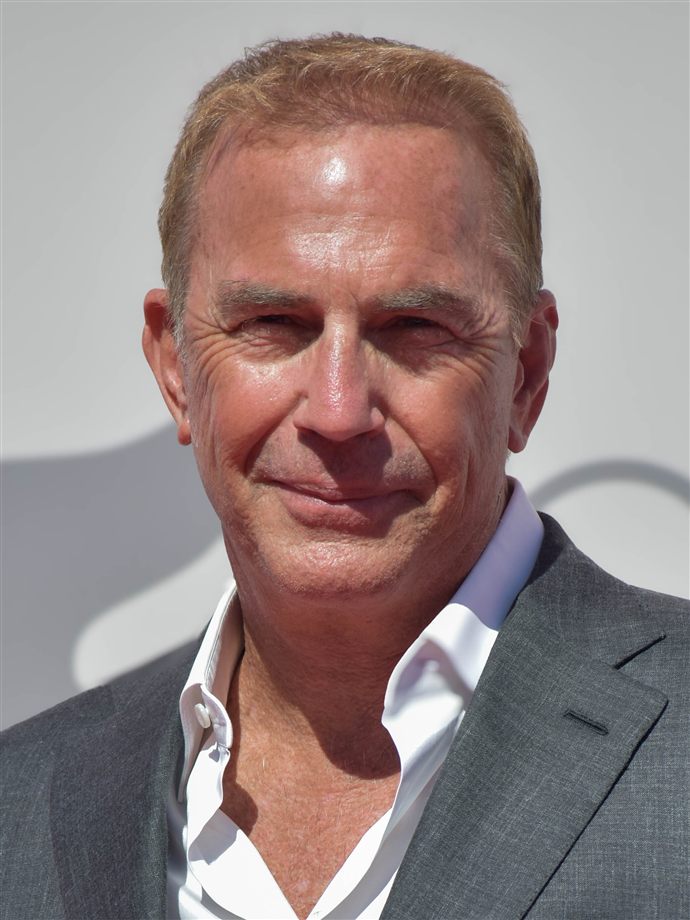
Yellowstone follows John Dutton (Kevin Costner), the patriarch of the largest contiguous ranch in the United States, as he battles developers, a Native American reservation, and political adversaries who want his land. The series is a neo-Western that uses the form to examine contemporary American anxieties — about land ownership, legacy, economic displacement, and what it means to defend a way of life that the modern world is slowly erasing.
The show’s commercial success defied every conventional industry assumption. Premiering on Paramount Network — a rebrand of Spike TV with no established prestige identity — it built an audience entirely through word of mouth and repeat viewing, eventually becoming the most-watched cable drama in American television history. Its audience skewed rural, older, and politically conservative in ways that the streaming-era television industry was structurally unprepared to serve, and Yellowstone became a cultural phenomenon by serving an audience that had been largely ignored.
The Kevin Costner situation — the reported conflict between star and showrunner over filming schedules, during which Costner was working on his own Western film project Horizon — became one of the most covered stories in television in 2023. Season 5 Part 2 resolved without Costner’s John Dutton, and the series concluded on its own terms. The ending was controversial but demonstrated that the Yellowstone universe — as Sheridan had always maintained — was larger than any single character.
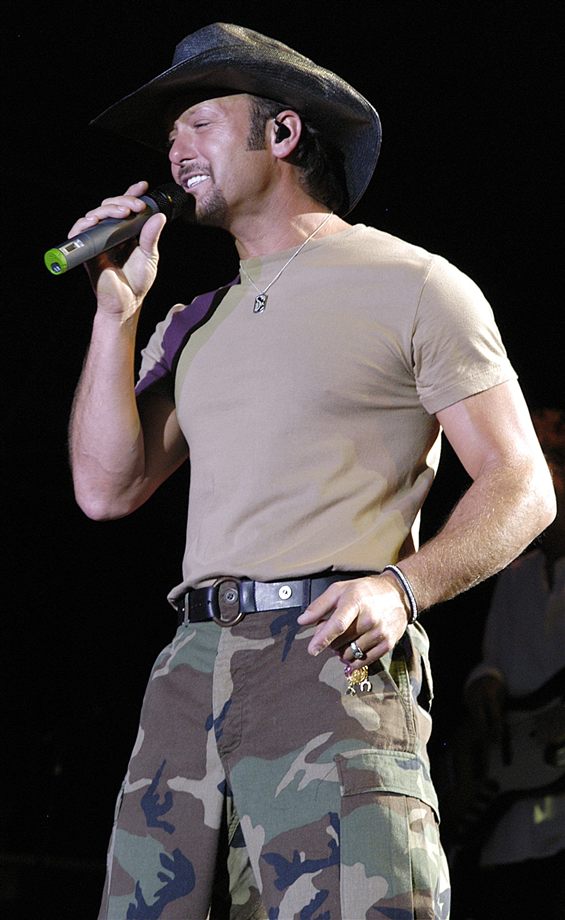
1883 is the origin story of the Dutton family, following James Dutton (Tim McGraw) and Margaret Dutton (Faith Hill) as they join a wagon train traveling from Fort Worth, Texas to Montana in 1883, seeking land and a new life. The journey is narrated by their daughter Elsa (Isabel May), whose voice provides the show’s elegiac, almost literary tone. Sam Elliott plays Shea Brennan, a Pinkerton agent scarred by Civil War and personal loss who guides the train.
1883 is arguably Sheridan’s finest writing in the television medium. The show does not romanticise the westward migration — the trail is brutal, fatal, and relentless, and Sheridan treats the violence and death with documentary honesty. Isabel May’s narration as Elsa gives the series a quality closer to literary fiction than genre Western, and the ten-episode arc is structured with the compression and inevitability of a short novel. Sam Elliott’s performance is one of the best in the Western genre’s history.
The series drew massive Paramount+ subscriber numbers upon premiere and confirmed that the Yellowstone universe could sustain high-quality prequel material. It was nominated for the Emmy for Outstanding Drama Series, an unusual achievement for a streaming prequel spinoff.
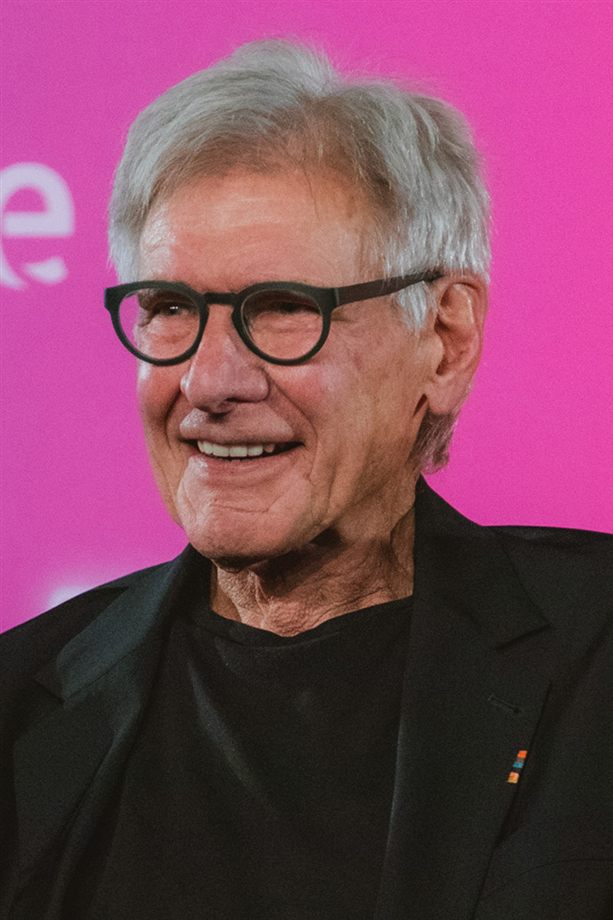
1923 focuses on a new generation of Duttons — Jacob Dutton (Harrison Ford) and his wife Cara (Helen Mirren) — as they navigate the harshest period in the ranch’s history: drought, Prohibition, encroaching cattle barons, and the lead-up to the Great Depression. The series marks Harrison Ford’s first major television role and Helen Mirren’s first American television series, and both deliver career-best small-screen performances.
Where 1883 focused on a journey, 1923 is a siege drama — the Duttons defending what the previous generation built against enemies on every side. Sheridan uses the Prohibition era to examine how institutional violence (government, industry, competing land interests) targets individuals and families who resist assimilation into corporate-scale agriculture. The show also threads a parallel storyline involving a young Native American woman, Teonna Rainwater (Aminah Nieves), whose boarding school experiences provide one of Sheridan’s most direct engagements with Indigenous American history and trauma.
Set at the historic Four Sixes Ranch in Guthrie, Texas — one of the most famous cattle operations in American history, founded in 1870 and spanning nearly 350,000 acres — 6666 was teased throughout Yellowstone’s run via the character Jimmy Hurdstrom (Jefferson White), who is sent to the Four Sixes as part of the show’s recurring storyline. The ranch itself became a location and recurring element in Yellowstone, building audience familiarity before the spinoff was formally announced.
The series will focus on the contemporary ranch operations, the cowboys who work the land, and the culture of the Texas cattle industry. Sheridan purchased a stake in the actual Four Sixes Ranch, blurring the line between personal investment and creative project in a way consistent with his broader approach to authenticity. The show has been positioned as a companion to the Yellowstone universe but set in Texas rather than Montana, providing geographic and tonal contrast.
As of 2025, 6666 remains in active development. No premiere date has been confirmed.
A further prequel in the Yellowstone universe, set during the Second World War and following a generation of Duttons navigating the ranch during the war years. The project would bridge the gap between 1923 (covering the early-to-mid 20th century) and the post-war generation that would eventually produce John Dutton’s parents.
Sheridan has spoken about his interest in how the ranch survived successive American crises — the Depression, the Dust Bowl, the Second World War — and 1944 represents the most recent announced extension of that multigenerational narrative. The WWII setting allows Sheridan to explore the ranch in a period when many of its men were abroad, placing women and older family members at the centre of its survival. No casting or production timeline has been confirmed.
Sheridan’s Most Urgent Current Drama
Now streaming on Paramount+. Season 2 confirmed. Billy Bob Thornton as Tommy Norris — the landman who holds the Permian Basin oil industry together one deal, one crisis, one impossible negotiation at a time.
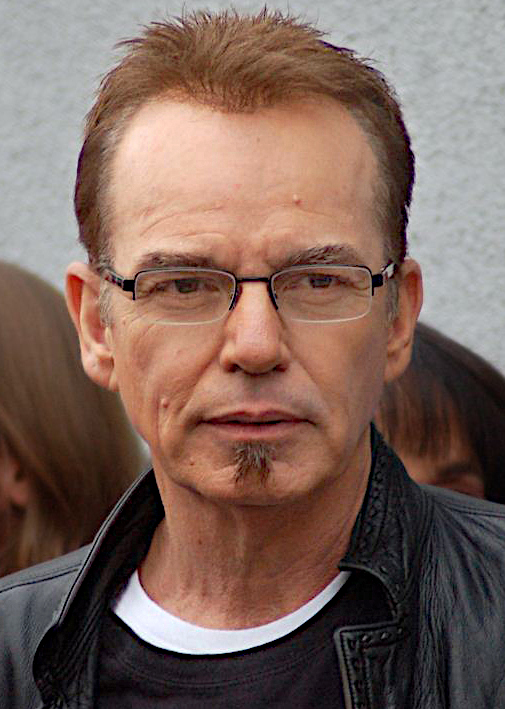
Landman is Taylor Sheridan’s return to the territory he knows most deeply — West Texas, the land, and who controls what grows from it. Where Hell or High Water examined a family being consumed by a predatory bank, Landman goes inside the machinery that drives that entire economy: the oil industry of the Permian Basin, the most productive oil-producing region in the United States and one of the most consequential industrial landscapes on earth. It is a show about America’s energy economy from the inside: from the drill floor to the lease office to the executive suite, with all the moral compromises required at each level laid bare and dramatised without sentiment.
Billy Bob Thornton plays Tommy Norris, a landman — an occupation with no clean analogue in other industries. The landman is the negotiator, the fixer, the lease-getter: the person who sits across from a West Texas rancher and persuades him to allow drilling beneath his cattle pasture, then turns around and argues to the same company for the rancher’s fair share. Tommy operates in the gap between capital and land, between the executive floor and the drill floor, between legality and its convenient edges. He has no official title that captures what he actually does, and anyone who has ever worked in the Permian Basin immediately knows exactly what he is and what it costs him.
Thornton’s performance is the fulcrum of the series. He brings to Tommy the particular quality he brings to all his best work: a complete absence of vanity combined with an equally complete intelligence. Tommy is tired, frequently wrong about his personal life, expert at his job in ways that resist easy dramatisation, and funny in the flat, deadpan manner of a man who has seen every possible version of a crisis and learned that most of them resolve given enough time and patience. Thornton plays all of this without a single unnecessary gesture. It is one of the finest American television performances in recent memory.
The Permian Basin of West Texas produces more oil than any region in the United States and most nations on earth. Its landscape — flat, sun-hammered, punctuated by pumpjacks and flare stacks stretching to every horizon — is the visual opposite of Yellowstone’s Montana peaks, but operates on the same underlying logic: resource extraction, who controls the land, and who gets crushed in the transaction. Sheridan knows this territory from his Central Texas upbringing, and the show is inflected with the same geographical specificity that distinguishes all his best work from generic genre television. The dust and heat are not aesthetic choices. They are facts.
The Permian also exists alongside a parallel world of violence. Cartel activity in West Texas is not a plot device in Landman — it is ambient, structural, a fact of daily life for the roughnecks and landmen who work these fields. The oil money attracts it the way blood attracts flies, and everyone who works out there has learned to navigate around it the way they navigate around flash floods and blowouts: as a permanent hazard that the news media occasionally notices and the people on the ground deal with every day. Sheridan integrates this reality the way he integrates institutional corruption across all his work: not as exceptional event, but as the permanent condition within which everyone operates.
Landman completes a thematic trilogy with Hell or High Water and Wind River. All three examine what happens to communities built on extraction — of oil, of land, of labour — when the economics turn predatory. In Hell or High Water, the victims are a ranch family being foreclosed on by a bank extracting their land; in Wind River, a Native American community abandoned by federal indifference; in Landman, the full machinery of the extraction economy is put on screen from every level simultaneously, from the roughnecks sleeping in work camps to the executives in private aircraft, with Tommy Norris moving between all of them and belonging fully to none.
The connection to Hell or High Water is the most direct. Both are set in West Texas. Both concern money and who ends up with it. Both feature protagonists operating inside morally compromised systems while maintaining their own improvised ethical codes. Tommy Norris is what Toby Howard might have become: a man who chose to work inside the extraction economy rather than burn it down. He has all the competence and none of the rage of Hell or High Water’s outlaws — and the show quietly asks whether that makes him wiser, or merely more thoroughly implicated in the machine he has mastered.
Beyond the Western Universe
Alongside the Yellowstone universe, Sheridan has created or executive produced a parallel slate of action and crime dramas that have collectively defined Paramount+’s identity as a platform.
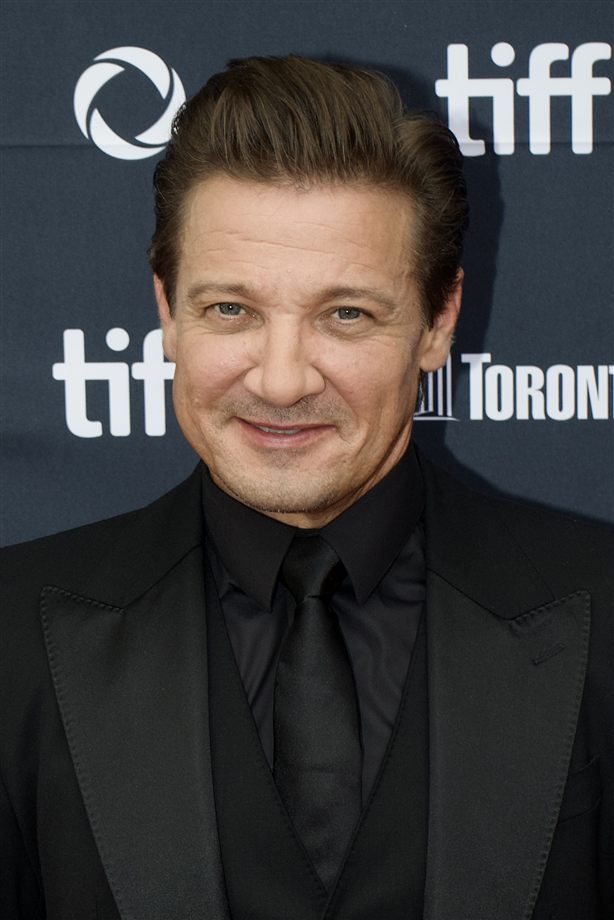
Mayor of Kingstown co-stars Jeremy Renner as Mike McLusky, the unofficial power broker in a fictional Michigan city whose entire economy depends on its prison complex. Mike navigates between incarcerated gang leaders, corrupt prison staff, law enforcement, and city politicians — brokering truces, extracting concessions, and preventing violence through sheer proximity to every faction simultaneously. He is not elected, has no official authority, and holds power entirely through relationships and reputation.
The show is Sheridan’s most overtly political, examining the prison-industrial complex, systemic racism in incarceration, and the way that entire communities become economically dependent on carceral infrastructure. Its tone is darker and more urban than the Yellowstone universe — closer to The Wire in its institutional analysis, though more plot-driven and genre-inflected in execution. Hugh Dillon, who co-created the series, also appears as a series regular, and the show has continued to develop following Jeremy Renner’s near-fatal snowplow accident in January 2023, from which he recovered to return to production.
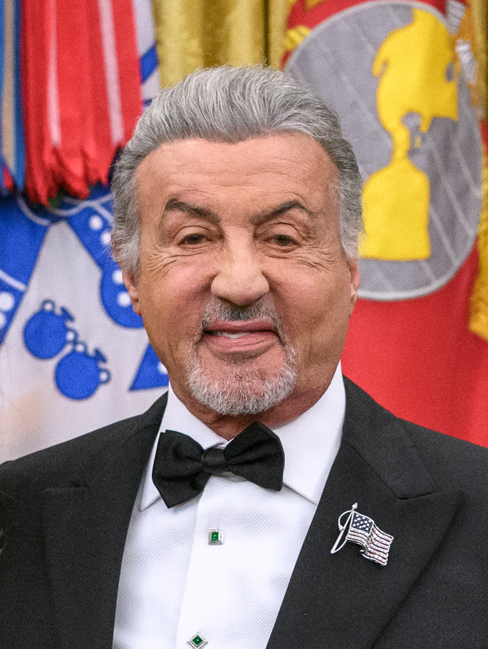
Tulsa King follows Dwight Manfredi (Sylvester Stallone), a New York mafia capo who, after serving 25 years in prison for taking the fall for his boss, is unceremoniously exiled to Tulsa, Oklahoma and told to establish a criminal operation there. The premise generates its tension from the collision between Manfredi’s old-world mob sensibility and the utterly foreign culture of the American heartland.
It is Sheridan’s lightest, most commercially accessible work — a crime comedy as much as a drama — and Stallone’s performance has been widely praised as a late-career reinvention. The show is the one project in the Sheridan portfolio that most clearly demonstrates his range: the same writer who crafted the austere tragedy of 1883 also writes Dwight Manfredi learning to navigate a marijuana dispensary in Oklahoma with warmth, wit, and genuine comedic instinct.

Special Ops: Lioness follows CIA operative Joe (Zoe Saldana), who runs the Lioness Program — a real intelligence initiative in which female operatives are embedded as personal contacts of high-value terrorist targets, building relationships over months to gain operational access. The show draws on Sheridan’s established interest in institutional violence, moral compromise under operational pressure, and the human cost of covert action.
Zoe Saldana’s Joe is one of Sheridan’s most complex protagonists — a woman who is professionally exceptional and personally fractured, holding together a marriage and family while conducting operations that require total psychological immersion in other identities. Nicole Kidman plays her handler and institutional superior, and Morgan Freeman appears as the U.S. Secretary of State. The show has been praised for its action sequences and for Saldana’s performance, and has attracted Sheridan’s largest female audience.
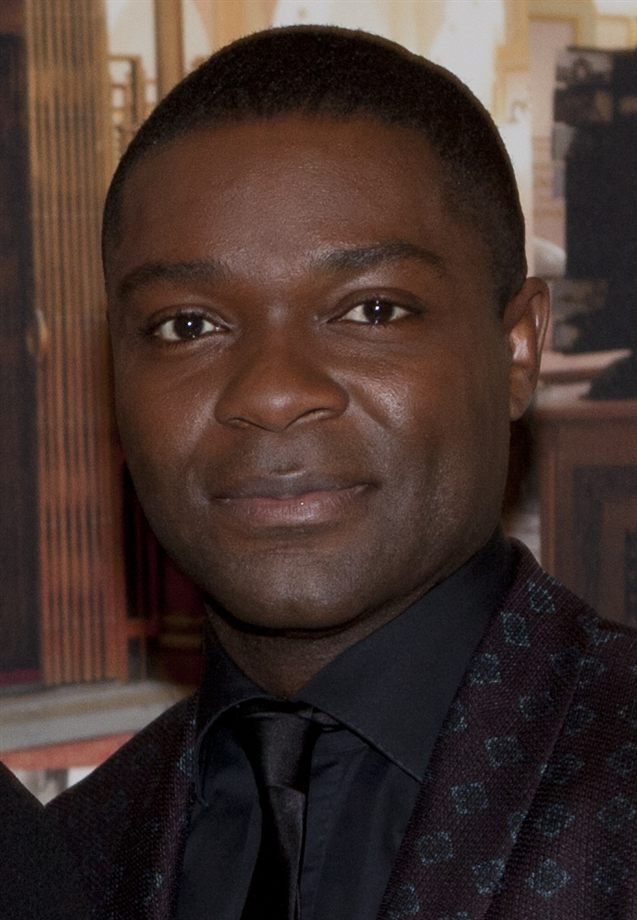
Lawmen: Bass Reeves dramatises the life of Bass Reeves (1838–1910), a formerly enslaved man who became the first Black U.S. Marshal west of the Mississippi River and one of the most effective lawmen in the history of the American frontier, reportedly arresting more than 3,000 felons and killing 14 outlaws in self-defence over his career. David Oyelowo’s performance was widely described as one of the finest of his career.
The series was created by Chad Feehan rather than Sheridan directly, but operates within the Sheridan/Paramount+ production infrastructure and shares the universe’s sensibility. It represents Sheridan’s willingness, as executive producer, to facilitate stories about the American West that his own background would not naturally generate. The show received Emmy recognition for Oyelowo’s performance and was praised as a significant and long-overdue historical dramatisation.
The Frontier Trilogy & Beyond
The screenplays that established Sheridan’s voice before television made him a franchise creator.
Sheridan’s debut produced screenplay is a border drug war thriller following an idealistic FBI agent (Emily Blunt) drawn into a morally ambiguous CIA/DEA operation targeting a Sonoran cartel. Directed by Denis Villeneuve with Roger Deakins’ cinematography and a Jóhann Jóhannsson score, Sicario is one of the most accomplished American action films of the 2010s. Its portrait of institutional violence — the way that state power operates through officially deniable channels — is Sheridan’s central theme in concentrated form. Josh Brolin and Benicio del Toro co-star. The film received three Oscar nominations (Cinematography, Score, Sound Editing) and is the document that announced Sheridan as a major screenwriting voice.
Sheridan’s most personal screenplay: two brothers (Chris Pine and Ben Foster) robbing branches of the Texas bank that is foreclosing on their family ranch, pursued by a retiring Texas Ranger (Jeff Bridges). The film is a modern Western about dispossession, economic despair, and the moral logic of men defending their land against institutional predation — the same themes that would animate Yellowstone two years later. Hell or High Water was nominated for four Academy Awards including Best Picture and Best Original Screenplay. It is the film that most directly translates Sheridan’s childhood experience — the loss of the family ranch — into narrative form, and it remains his finest single piece of work in any medium.
Sheridan’s directorial debut follows a U.S. Fish and Wildlife Service tracker (Jeremy Renner) and an FBI agent (Elizabeth Olsen) investigating a murder on the Wind River Indian Reservation in Wyoming. Wind River is the darkest and most formally austere work in Sheridan’s output — a film about violence against Indigenous women, institutional indifference to crimes on reservations, and the specific isolation of life in deep-winter Wyoming. The film won the Un Certain Regard Best Director award at Cannes. Its uncompromising treatment of its subject matter — and its refusal to provide the cathartic resolution that genre convention would demand — is Sheridan at his most unsparing. Jeremy Renner’s subsequent casting in Mayor of Kingstown reflects the working relationship established here.
The sequel to Sicario returns Benicio del Toro and Josh Brolin but removes Emily Blunt’s moral centre, producing a film that is more explicitly cynical about American covert operations than the original. Sheridan’s script focuses on a CIA black operation to use cartel conflict as a weapon, which spirals beyond anyone’s control. The film was commercially successful if critically polarising, with some critics finding its political darkness more effective without the original’s humanising perspective, and others missing Blunt’s grounding presence. It is a genuine continuation of the original’s themes rather than a commercial retread.
Sheridan returned to direction with this adaptation of Michael Koryta’s novel, starring Angelina Jolie as a smokejumper (wildfire parachutist) protecting a young boy from two assassins in the Montana wilderness. The film is more conventionally genre-driven than Sheridan’s previous work — a survival thriller rather than a moral study — and received mixed reviews compared to his earlier films. Nevertheless, it demonstrated his facility with action and landscape cinematography, and its Montana setting directly parallels his concurrent work on Yellowstone.
What Comes Next
Projects announced, in development, or confirmed as of 2025. The Sheridan pipeline is the largest active slate of any individual television creator.
A drama set at a luxury ski resort in Montana, examining the class and power dynamics of the American ultra-wealthy against a Western landscape backdrop. The show has been described as Sheridan applying his characteristic interest in land and who controls it to the ski resort industry. No cast or premiere date confirmed.
The Yellowstone spinoff set at the historic Four Sixes Ranch in Guthrie, Texas. Built into the Yellowstone narrative across multiple seasons via the Jimmy Hurdstrom storyline. Sheridan holds a personal stake in the actual ranch. Texas-set counterpart to Yellowstone’s Montana drama. No premiere date confirmed.
The next Yellowstone universe prequel, set during the Second World War. Would cover the generation of Duttons who maintained the ranch while men served overseas, continuing the multigenerational saga into the mid-20th century. Announced but no further production details confirmed.
Special Ops: Lioness has been confirmed for a third season, continuing Zoe Saldana’s Joe and the CIA Lioness Program into new operational territory. The show has been Sheridan’s most consistent performer with female audiences and represents an ongoing franchise commitment from Paramount+.
The Jeremy Renner crime drama continues into further seasons, with Renner’s real-life recovery from his 2023 accident having become part of the show’s production story. The prison-economy premise provides sustainable ongoing narrative and the show has maintained a strong core audience.
Billy Bob Thornton’s Texas oil drama was renewed for a second season following strong premiere performance. The West Texas setting and Sheridan’s energy-industry subject matter represent a new strand in his creative output, distinct from both the Western universe and the law enforcement dramas.
The Most Valuable Creator in Cable Television
Industry Recognition
| Year | Award | Category | Project |
|---|---|---|---|
| 2016 | Academy Awards | Best Original Screenplay — Nominated | Hell or High Water |
| 2016 | WGA Awards | Best Original Screenplay — Nominated | Hell or High Water |
| 2016 | BAFTA Awards | Best Original Screenplay — Nominated | Hell or High Water |
| 2017 | Cannes Film Festival | Un Certain Regard — Best Director Won | Wind River |
| 2022 | Emmy Awards | Outstanding Drama Series — Nominated (EP) | 1883 |
| 2022 | Golden Globe Awards | Best Drama Series — Nominated | Yellowstone |
| 2023 | Emmy Awards | Outstanding Drama Series — Nominated (EP) | Yellowstone |
| 2023 | WGA Awards | Drama Series — Nominated | Mayor of Kingstown |